Wednesday, May 29, 2013

Consumptive Orphans and the Destruction of Childhood

A few weeks ago, Minnesota became the twelfth state in the nation to recognize same sex marriage. Before the vote, the senate staged four hours of debate on the issue. I agreed with all the pro-gay marriage senators beforehand and didn't see much validity in the anti- senators' arguments (“Won't somebody please think of the children!”), but one senator opposed to marriage equality did say something that struck me. He said, “When Massachusetts legalized gay marriage, a major charity actually got out of the adoption business.” (He meant Catholic Charities, which came up against some legal troubles for refusing to broker adoptions to same sex couples.) But let's workshop his statement for a moment. “Adoption business.” It sounds right, doesn't it? What other charitable works can we link up to the word “business”? Soup kitchen business? Visiting the elderly business? Homeless outreach business? Nursing home business? Animal rescue business? None of those roll off the tongue the way “adoption business” does. “Nursing home business” is probably the closest, because healthcare in this country is for-profit. But, “adoption business.” There's a commodity: a live infant; a buyer: the adoptive parents; a seller: the unwed mother or impoverished foreign equivalent; and a middle man: the adoption agency. It's an evident enough business undertaking that a Republican state senator can offhandedly refer to it as such while talking about something else entirely, but adoption shouldn't be a business, should it? Adoption is the merciful act of taking in an unwanted orphan who would otherwise grow up to be a pickpocket in the streets of Dickensian London or modern-day Guatemala City and die of consumption, or, oh! wait..., Guatemala has suspended their international adoption program because of massive corruption, including baby-selling and kidnapping.

 Domestic and international adoptions are rife with problems, under-scrutinized, potentially corrupt, and someone outside academia has finally written something about it. Child Catchers: Rescue, Trafficking, and the New Gospel of Adoption, by journalist Kathryn Joyce, needs reading by every potential adoptive parent and child welfare expert from here on out. In the first chapter, Kathryn Joyce gives us a number from a UN report on international child welfare: 143 million, the number of “orphaned and vulnerable children” in the world. This is a number that conservative Christians use when discussing the “orphan crisis”. However, “orphaned and vulnerable” does not mean that there are 143 million institutionalized children awaiting homes. “Orphaned and vulnerable” includes children who have two impoverished parents, one living parent, live with aunts and uncles, grandparents and other relatives, children who are “in situations that, if they occurred in America, we would never refer to as orphanhood.” There are thousands of children in institutions in the developing world, but many of them are there because of a family crisis, for respite care, or because parents in some countries use orphanages as “de facto boarding schools,” where children will be fed and educated in lean times. Ms. Joyce visits an orphanage in Rwanda and describes meets a widower father visiting his toddler daughter. There is an understanding that the daughter will be retrieved from the orphanage at the age of three and raised from then on by her father, older siblings, and extended family. But from a Western point of view, a child in an orphanage is an orphan and, therefore, adoptable. To conservative Christians, 143 million has an “and growing” tacked on to it, and each child is an orphan in need of a home. A good Christian can do their bit by adopting one, or five, or ten orphans themselves, citing James 1:27, “Pure religion is this, to help the widows and orphans in their need.” Much like the “well-regulated militia” in the second amendment, Christians are taking a short sentence and truncating it further. Adopting a foreign child is more viscerally satisfying than donating money to an international aid organization and hoping that it helps the deserving poor.

 “Ethiopia did have large numbers of children who had lost a parent to HIV/AIDS as well as a significant population of street children... Another factor was the wide range of of actors involved in the local adoption support industry... The exponential growth in Ethiopia[n adoption] corresponded almost perfectly with the closure of Guatemala [as a sending nation].” Hotels catering to first world adoption tourists, drivers and tour guides, adoption agency staff and adoption brokers need to stay employed and to do that they need to feed the demand for adoptable children after the children who were actually institutionalized orphans were adopted out. Even though it's illegal, adoption agencies have been documented recruiting children from their families (as seen in this Australian news documentary, Fly Away Children: http://www.abc.net.au/foreign/content/2009/s2686908.htm). Ethiopia has no concept of anonymous adoption, and if adoption is presented as an opportunity for children to go to America and get an education, well, who wouldn't want that for their children? The story of Tarikuwa, Meya and Maree Lemma is just that sort of tragedy. The children's mother had died, but their father was alive, healthy, and working as a government clerk, although the Lemma's adoptive parents were told that he was dying of AIDS. Tragically, by the time the Lemma girls, now the Bradshaws, gained enough English to communicate this to their adoptive parents, they were American citizens in the custody of American parents who had no idea that the “orphans” they had adopted assumed that they would be returning to their family in Ethiopia after a few years. And the ability to remember and communicate with birth families is a privilege reserved for older children. A young child won't remember how to send letters to her birth parents' address; and adoption brokers have promised Ethiopian parents updates on their children's well-being and never delivered, worse complicated when the agencies close down and the records are boxed up and sent who-knows-where.

 Kathryn Joyce also goes back to the beginnings of American formal adoption since the orphan trains, codified during the 1920's to1940's when the supply of white babies dropped below the demand. Ms. Joyce presents an excellent introduction to the Baby Scoop Era and ties it to the tactics used in homes for unwed mothers today (they still exist), where potential birthmothers are isolated and convinced that the adopting parents have more right to the child in their womb than they themselves do. Quoting a birthmother: “'There's an organization motivated by a cause and a profit. But it's a pretty high price to pay: give away your first born and we'll take care of you for six months.” Add to that the daunting statutes of limitations for birthmothers who want to contest their children's adoptions: six months, three months, two days, and, in Utah, relinquishment is irrevocable, making Utah “adoption friendly.”

 Child Catchers already has space on my adoption shelf, next to The Girls Who Went Away: The Hidden History of Women Who Surrendered Children for Adoption Before Roe v. Wade; Wake Up, Little Susie: Single Pregnancy and Race Before Roe v. Wade; Fallen Women, Problem Girls: Unmarried Mothers and the Professionalization of Social Work 1890-1945; And Sin No More: Social Policy and Unwed Mothers in Cleveland 1855-1990; and Wanting a Daughter, Needing a Son: Abandonment, Adoption and Orphanage Care in China.

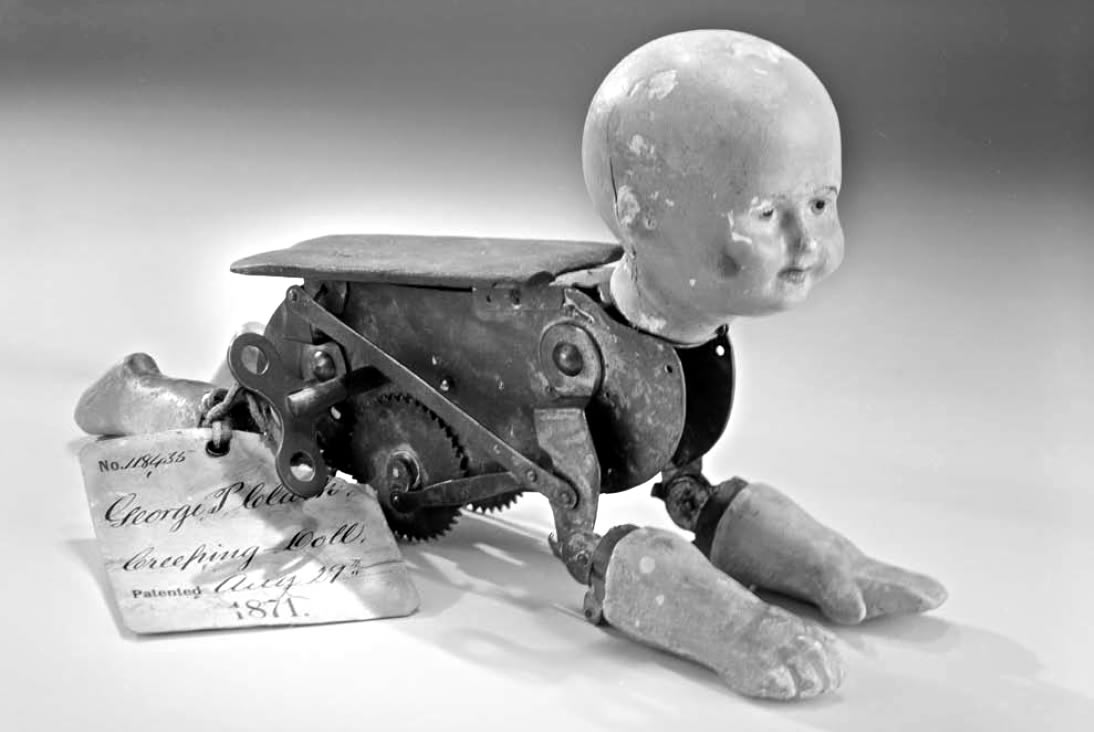
 A book with creepy doll pictures is Made to Play House: Dolls and the Commercialization of American Girlhood 1830-1930 by Miriam Formanek-Brunell. Based on the title, I assumed that this book would cover the years 1830-1870 and discuss the commercialization of American girlhood. Unfortunately, barely touches either of those places. Ms. Formanek-Brunell states that girls played with rag dolls, made dolls and doll wardrobes for sewing practice, and didn't need as many dolls because they had real live brothers and sisters to play with, and then she writes the other nine tenths of the book. She obviously sifted through loads of patents and back issues of turn-of-the-century toy industry journals, but, without context (What kind of market share did the mechanized doll makers command?, When did manufactured dolls become available to different groups of Americans?), this book is less for interested feminists than it is a research catalogue for doll collectors, although she does put in some ham-fisted ideology, like: “At the Edison plant, faith in technology determined that the mechanical phonographic dolls were produced by machines.” Ms. Formanek-Brunell is explaining that male manufacturers used technology to make dolls, while women doll makers kindly employed other women in a workplaces that resembled sewing bees.

 I did listen to Gertrude Knevels out-of-print-for-a-reason The Wonderful Bed a while ago. I think I didn't bother reviewing it fully, but it ties in with the ideas implied but not presented in the subtitle “...Commercialization of American Girlhood.” Three children, whose names I've forgotten, are staying at their aunt's house and find a box of toys from her childhood. In it, wrapped carefully in tissue paper, is a corncob doll, and the children sneer at it and say, “Why does she still have that?” Naughty, youngest boy almost burns it in the fire, but, later on, when the children are down the magic rabbit hole that is the bed itself having adventures and meeting all the toys, who are jerks, the kid sister ends up in a train carriage with her two fancy, store-bought dolls, who snub her. They are on their way to meet the queen of toys, the corncob doll, who is gracious and kind, and the kid sister understands that toys you make yourself are better than the ones you can buy in a store. Unfortunately, nowadays children making anything themselves has been relegated to hell in a handbasket, or at least to books with extremely specific instructions on how to make a full-on pharaoh costume using paper bags, a craft knife, 1/8 inch jute, four scarab buttons, and six feet of golden tulle. Childhood has been commercialized, especially in this country where we refuse to impose regulations on advertisers, and Made to Play House doesn't provide much background on that, although one could also argue that things were okay until TV deregulation in the early 1980s. At the end of the day, Ms. Formanek-Brunell's cobbled together her thesis and a research article about Kewpie dolls to make a book. Sometimes gently-edited theses make great books, but this one was not a winner.

 In other news, I hiked the Border Route Trail, 65.5 miles, in five days, two river crossings, way too many 2,000-foot peaks, and read 42 pages of Pratchett's The Fifth Elephant.

Friday, May 10, 2013

In Which I Discuss Two Similar Novels, Although One Is Much Better Than the Other


Americans are loud, rude, unmannerly, vulgar, boorish, guileless, and overfamiliar. Americans talk to much, laugh too loudly, spend too freely, dress too flashily. They hold their forks improperly. An American woman might even, and..., careful, let me fan myself..., an American woman might even speak to man to whom she has not been introduced. The shame of it.

A woman with this much virtue lost!, and such a woman might not even know her own disgrace. Like a child born into poverty does not know for what he wants, an American woman does not know she stands in such wretched ignominy. Like a savage who has never known religion, an American woman sins against a manner to which she has not been introduced. In her innocence, she is ignorant of her sins. But is a slow, lingering death punishment enough for such sins? Or, can't we all just learn to get along?

I'm not sure why Daisy Miller has survived the last 135 years in print while Frances Hodgson Burnett's A Fair Barbarian languishes in obscurity, but it certainly isn't because the former is better than the latter. Maybe Mr. James' other books are better, deeper, less cliché-driven, but they are, on the other hand, thicker, so if you feel like you should knock off some Henry James to see if he's any good but don't want to get stuck into Portrait of a Lady for the next few weeks, you read Daisy Miller like I did. Generations have made this mistake. Maybe Portrait of a Lady is fantastic. Maybe Portrait of a Lady is the epitome of nineteenth century fiction and it puts Galsworthy to shame and I'm never going to read it because Daisy Miller was so whimpering bad. Meanwhile, FHB does it again, gives the Austenian drama a twist, complete with boisterous American relatives, and her light is still hidden under the barrel of Children's Literature. It's a pity because her adult novels are so damn good. And they're funny. A Fair Barbarian is now my third-favorite FHB novel, unless I really like A Lady of Quality, which I'm reading right now. I'll let you know.

Daisy Miller and A Fair Barbarian are both concerned with, as stated previously, shockingly immoral young ladies, the kind who dress nicely and don't realize they're conversational pariahs. A proper young lady may only engage in politenesses about the weather while standing carefully shielded from the young man conversing with her by her own mother. Poor Octavia Bassett, in the FHB, doesn't have a mother, or rather her mother is in heaven or elsewhere, as she died in childbirth at the age of nineteen after a brief but successful career on the stage in San Francisco. And there Octavia's troubles began, and by troubles we, of course, mean: self-confidence, personability, an easy-going manner, charm, charity, intelligence, smiling. Daisy Miller has a mother but she's a useless slattern who can't even get her youngest son to bed before 11:00pm. Daisy Miller and Octavia are both Americans who find themselves tourists across the Atlantic, Daisy visiting the ruins and castles of the continent and Octavia visiting her maiden aunt. Octavia's father “had emigrated to America in his youth, having first disgraced himself by the utterance of the blasphemous remark that 'he wanted to get to a place where a fellow could stretch himself and not be bullied by a lot of old tabbies.'” Miss Miller's father is a prosperous something-or-other in outstate New York and Mr. Bassett has been a mining millionaire off and on out west.
I had no idea when I read Daisy Miller and A Fair Barbarian one after the other how similar they would be. They were written in 1878 and 1881 respectively, and they comment on the same manners and milieu, and the young women protagonists and have much in common, except that Octavia is self-aware and intelligent and Daisy is a pretty little nothing with no sense and no concept of her own desperately low place in the society in which she is traveling. In fact, one might go so far as to call Henry James a big, furry misogynist based on his inability to bestow sentience on his young protagonist. Also, Daisy Miller is a narrated by an asshole gentleman called Winterbourne who spends the entire book alternating between roles: as Daisy's escort and protector, or wondering if he should allow himself “lawless passions” with her because he could. His inclination to have his way with Daisy, as punishment for her being such a slut as to talk to him, is thwarted in Italy by her companionship with a Mr. Giovanelli, an Italian who, to his shame, is not English. Mr. Winterbourne washes his hands of Daisy, and decides to go for a stroll to the Coliseum late one night, where he discovers Daisy and Mr. Giovanelli talking on a bench. Mr. Winterbourne scolds Mr. Giovanelli for bringing Daisy out during the mosquito hours when she might contract malaria, which she of course does, dying and allowing Mr. Winterbourne to look back on her life for her. If only she'd had a less useless mother! Or a maiden aunt! Octavia has a maiden aunt, Miss Belinda Bassett, and she escorts her to Lady Theobald's tea party, where she meets Mr. Barold, another traveling bachelor of leisure, who thinks much like Mr. Winterbourne, but to different effect, as the book is not told from his perspective. I don't want to give away too much of the plot because, of course, once you have read my review, you will want to rush out and a read A Fair Barbarian and you are a discerning reader who will brook no spoilers, so let me give you some lines:

“Miss Belinda Bassett was a decorous little maiden lady, who lived in a decorous little house on High Street (which was considered a very genteel street in Slowbridge). She had risen at seven, breakfasted at eight, dined at two, taken tea at five, and gone to bed at ten, with such regularity for fifty years, that to rise at eight, breakfast at nine, dine at three, take tea at six and go to bed at eleven, would, she was firmly convinced, be but “to fly in the face of Providence,” as she put it, and sign her own death-warrant. Consequently, it is easy to imagine what a tremor and excitement seized her when, one afternoon, as she sat waiting for her tea, a coach from the Blue Lion dashed —or at least almost dashed— up to to the front door...”

Have I been reading anything that's not Victorian? Why yes, I read a graphic novel that caught my eye while I was full-scanning for Comic Con. Twelve Reasons Why I Love Her. Daisy Miller is a bit of a Victorian manic pixie dream girl, and Gwen, the “her,” is as well, although she turns out to be a full-on human being with a past and opinions, to her own detriment. Twelve Reasons Why I Love Her was rather uncomfortable, as New York allows its citizens to behave like jerks, and us kind Midwesterners read their graphic novels and shake our heads, wondering why New Yorkers don't walk around smiling all the time like we do. In non-chronological order, Twelve Reasons Why I Love Her is the story of Gwen and Evan, who meet at a foreign film. Gwen brings Evan flowers on their first date. There's a great drawing of her bunch of roses for him and his wimpy little bouquet for her. It would be funny but for the awkward argument because he feels emasculated. She says, “I thought it would be fun. I thought that you were the kind of guy who would appreciate me rejecting gender norms. When we met at the movie theater, I thought you were different. I didn't know you were going to be an asshole about it.” Later on, he's a total dick to her about Barry Manilow. Eventually, he ruins the relationship because she hung out with her ex, the guy she had a miscarriage with. The whole book was uncomfortable and sad, but it was a graphic novel so I read it in forty five minutes.

I've abandoned Why We Left by Joanna Brooks, about the first English colonists to come to North America, poor and indentured all. She explores their sad lives through folk ballads, and it's a good premise. The introduction was interesting, but the meat of the book concentrated on six ballads used to explore different pains as England transitioned from feudal to capitalist economy, with the attendant outmigration to the Americas, and the ballad analysis went slowly. Her main point was that these were not people seeking opportunity, they were desperate people looking to eat (which they often failed to do in America as well, although sometimes they ate each other)and escape arrest for vagrancy. Most of these people left England as landless laborers and remained working-class and uneducated as they moved from England to the American South and then west from there in search of jobs or farms and finally to California, where her own family ended up after generations.

I've finished The Child Catchers, more on that next time, and I also read The Wonderful Bed. I've been reading magazines lately. They're less fun to blog about, although I like Pacific Standard.

Monday, April 22, 2013

Camping vs. Fame vs. Housewifery vs. More Public Domain Audiobooks


Kevin Callan, in his lark of a sequel to the fantastic camping book The Happy Camper, has a great story about risk. On a paddling trip with his friend Audrey, he takes a running jump into a lake and breaks his ankle on a rock. Audrey says, “Aren't you glad you weren't solo camping when you broke your ankle?” Kevin says, “If I was solo camping, I never would have jumped into a lake like that.”

I've been squirrelly to go hiking all winter, and I've been reading some camping books, but I need the right kind of camping book. I have yet to choose a camping book where people are willfully stoopid. Part of me wants to read Jon Krakauer's Into the Wild or Aron Ralston's 127 Hours/Between a Rock and a Hard Place, but I don't know if I could read a book where people's blatant mistakes get them into ridiculous situations and they suffer from them. Well, yes, a person who goes camping badly won't necessarily come to harm, but you shouldn't go waltzing with bears like Timothy Treadwell and expect to come out of it safely. Aron Ralston, for all that he's James Franco, made the cardinal mistake of not telling anyone where he was going before he went climbing for the weekend. After he was missed at work on Monday, his rescue was further delayed by the search teams' needing to comb an entire mountain range to find him, since no one had an idea of his approximate location. If a person can't call their parents and say, “I'm going hiking in this area and if I'm not back Sunday night then I'm probably injured or dead so you should alert the authorities,” then why should I read their book? (Kevin Callan has another great story about a canoeist who failed to notify his emergency contact when he got back from his trip, and the massive search and rescue that was undertaken on his behalf while he unpacked his gear and went to bed.)

I don't want to read camping books about daft people, so what have I been reading? Kevin Callan's Wilderness Pleasures (which I leant to Sara because it's pro-kayak), Mugged by a Moose, and Up: A Mother and Daughter's Peakbagging Adventure. I actually read Wilderness Pleasures back in January, but if one were to read the same genre all the time, one would go mad with boredom, even if all the stories were as hilarious as the one in Mugged by a Moose where the guy almost gets eaten by a polar bear. Unfortunately, not all the stories in Mugged by a Moose are all that hilarious, but I've only ever found one travel anthology where all the stories were good (Going Alone: Women's Adventures in the Wild) and those stories aren't funny, just swashbuckling. Mugged by a Moose was maybe half funny and half meh, but that's pretty good for a travel anthology. I snagged a Best Lesbian Travel Adventures out of the recycling bin at work last year, and that book didn't even open with a good story.

Peakbagging is not a sex act (Missie says it sounds like one), it is climbing to the tops of all the mountains in a certain place and then feeling good about it. New Hampshire has 48 mountains over 4,000 feet and when you climb all of them you get a T-shirt. Up: A Mother and Daughter's Peakbagging Adventure is the story of Patricia Ellis Herr and her daughter Alex and their attempt to bag every peak in New Hampshire. Fortunately, Trish doesn't describe every peak they bag. Amazingly, she keeps the story rolling. She talks about highlights, judgement, risk management, planning, her daughter's moods, research, the challenges of hiking with children, and occasionally she describes a view. It's great. I know firsthand how plodding your mental place can be while you're hiking. If I wrote a book about my solo hike last summer, I would tell you about the half hour I spent thinking about my co-worker's vacation. “I bet they're going to the beach.” “I wonder if they're eating seafood?” Sometimes I hike and relive entire episodes of television shows. And the landscape. “Here's some more trees. Their leaves are green.” Trish knows not to deliver a blow by blow of every hike; she keeps up the drama. She starts out with a gut-wrenching story about a day when she did everything right. She and her daughters, Alex (five) and Sasha (three), checked the weather forecast before they left home. Trish had all their emergency supplies in a pack, they were hydrated and aware, and a lighting storm formed above their heads, formed! (according to Bill Bryson, in the White Mountains storms do that) and in five minutes they went from sunshine and puffy clouds to pounding rain and lightning. Trish had two little children above the tree line. She made the best decision she could, dropped her pack, picked up Sasha and they ran for it. She stowed the kids in lightning position in a hollow. They needed to descend, but Trish didn't feel safe without her pack. What if she snapped her ankle on the way down? What if conditions worsened and they had to spend the night on the mountain? If Trish left the girls and ran for the pack, Sasha might bolt from fear, and then she would have a lost three-year-old on a mountain in a storm. Firm instructions to stay where they huddled, and Trish ran up and came back down to two sobbing little girls, Alex hanging onto Sasha's raincoat and saying, “She wanted to run and look for you.” Those were the risks that Patricia Herr took when her five-year-old daughter decided she wanted to climb all the mountains. After she figured out how to limit risks. Trish tells the story of her daughters' first, abortive, attempt to summit, when she made all the mistakes. The family waited until April, when the snow in their front yard was melted, then Trish threw some water and snacks in her backpack and they started hiking. They hit snow not very far up the mountain. Trish was in shorts. The girls kept sinking up to their waists. An old man came down the mountain in snowshoes and gave them some funny looks. Trish turned her daughters back around, did two months of research, dropped a thousand dollars on equipment and she and Alex did their first 4,000er in June. Trish was constantly surprised by Alex's tenacity. She earned her peakbagging t-shirt at the age of seven, at the end of the book, and according to their website, they're climbing about in other states now. Patricia Ellis Herr's husband is a professor at Harvard, hence the time and resources, but the book was still a fantastic, outdoorsy read.

And then I got curious about Kristin Hannah. Her books have pastel covers and titles like Home Front and Angel Falls and they sell like hot cakes. I should have chosen a thinner Kristin Hannah, but I was downstairs at work deciding which backstocked audiobook to check out, and Firefly Lane jumped out at me. I was hoping it would be a gripping fluff of unputdownableness, but it wasn't. I did finish it, however, which makes it better than Twilight. Kate and Tully are best friends forever and ever until 2005 when Kate dies of cancer. It works; I was wondering Kristin Hannah was going to wrap things up since every historic event and fashion style since 1976 was chronicled, and the book needed to end solidly. Kristin Hannah couldn't just let the future go in an ambiguous direction with no skinny jeans, she had to rip Kate and Tully apart with death. If I had a friend dying of cancer, I would probably feel differently about this book.

Before Kate dies, she's a housewife. She is, actually, the kind of woman who reads Kristin Hannah novels, except that her husband makes enough money that things like dying of cancer and putting money in the kids' college fund aren't mutually exclusive. Tully is a famous news broadcaster/ talk show host. She majored in journalism but her obsession is getting herself famous on TV. Tully and Kate's husband Johnny are both journalists with an alarming disregarding for the whole “news” thing. None of the characters are deep, except the men who look into Tully's eyes and say, “You need to love even if it hurts,” and it's hard to cram thirty years into three hundred pages, so Kristin Hannah doesn't let her characters have relationships outside of Kate, Tully, Johnny,Tully's two occasional boyfriends, Kate's parents and her daughter. You wonder: Why don't these people make other friends? How are these two women who've never had anything in common still friends? Why is Kate's funeral packed when she only knows eight people? The entire premise, that Kate and Tully become friends in junior high and then Tully moves away and they stay in touch and remain best friends forever, seemed unlikely. Eighth graders are bad at staying in touch, and Kate and Tully continue to have nothing in common for the next thirty years, except Johnny. He's in love with Tully, Kate's in love with him, he and Tully boink, Kate stays in love with him, he gets Kate pregnant and remains devoted to her until, on her death bed, she awkwardly tells him that he and Tully should get back together.

Kate is boring in a plausible, housewifely way. Tully is boring in a famous way. You see, fame is hard and no one ever loved Tully so she feels lonely in her forties and wishes she had a family like her harried best friend has. It's the kind of fame that non-famous people imagine famous people have so that they can feel good that the rich cry too. I only know one famous person, and she's an author, not a talk show host, but the highlight of her week is playing Scrabble with my mom on Fridays. I would posit that real famous people, especially people who are famous for being skilled at their careers, are not as empty inside as Tully is. They also have bailout options. If Oprah (and Kristin Hannah says Tully is half as famous as Oprah) wanted to commit herself to nonprofit work or retire to a horse farm, she could probably manage it. Kristin Hannah creates a weird TV star/housewife dichotomy, and tells us that love is the most important thing, which means that housewifery trumps famousness. But if housewives die, and TV stars end up with their dead best friend's husband, then isn't it better to be famous?

Other things I've been reading: From Plotzk to Boston, a contemporary account, by a sixteen-year-old girl, of what it takes to get from the pale of Russia to Boston by cart, train, and steamer. Sweethearts by Sara Zarr, which was a book club book for a book club meeting that I failed to attend, and When Patty Went to College, where Patty has fewer hijinks than in Just Patty.

Thursday, April 18, 2013

A Campground Bathroom is Like Public Space in America


Last summer I hiked one hundred miles on the Ice Age Trail from the edge of Lincoln County, WI to the Veterans Memorial Campground in the Langlade County Forest and back. The forest was emerald green. I filtered water from clear streams. I literally heard wolves howling at night. I hiked fifty miles in four days, and I had one conversation with another human during those four days. I was walking a road segment and an older gentleman pulled up in his truck and politely asked what I was up to. I explained that I was hiking the Ice Age Trail. He'd never heard of it, even though he lived on it, but he asked if I needed anything, and when I said I was fine he drove off and into his driveway a few hundred yards up the road. Unfortunately, his lawn décor was a fake grave labelled “trespasser” and a sign about exercising his second amendment rights. That was on Wednesday. On Thursday, around 5:00pm, I hiked my tired knees into the Veterans' Memorial Campground, where every campsite has RV electrical and water hook-ups, and there costs $20 a night. I was excited to see people. I was also excited about toilets. I had run across two of them on the trail. One was at an ATV shelter, the other one was at a picnic ground. They were both as clean and well-stocked as pit toilets can be, but there's something about using the bathroom and washing your hands afterward that you can't duplicate in the wilderness.

I used the first toilet I came across, down by the lake. It was unplumbed and out of hand sanitizer, and it was kind of a let down. I was looking forward to using the restroom building with electric lights located in the main campground. Wandering around, I was definitely the only tent in the campground. Everyone else had an RV, and they were all big. No pop-ups. I found a campsite next to a dad and ten-year-old daughter because, as the Her Side of the Mountain blog says, “Choose a campsite next to a family. They'll be too busy watching their kids to attack you.” I set up my tent, and hung my food in a tree. It feels primitive, I tell you, to be hauling a dry-bag of food into the most promising tree you can find while your neighbors are packing their suppers into coolers and storing them in their camper kitchens. It was dark by the next time I had to go to the bathroom. I brought all my toiletries, such as they were, and spent a long time brushing and flossing and staring at my five-days-unwashed hair in the mirror. I'd expected to see people in the bathroom around going-to-bed time, and a few people came and went into the stalls while I was dithering about, but no one did toothbrushing or said more than “Hi.” The next morning, I woke up and used the bathroom again. The novelty was mostly worn off, but I still had to use it. I was up early and I had a lovely stroll around looking at peoples' lawn signs. If you buy an RV and you want to go camping in Wisconsin, you need a painted wooden sign that says “The Johannsens” or “Mike and Judy's Place.” Bonus points if it's in the shape of a paddle or it has a duck on it. Also, bring at least four lawn chairs, an outdoor rug, and some tiki torches.
The bathroom was fun. I brushed my teeth. One of the toilets was clogged. After breakfast, I hiked around the area and looked at the arboretum, read some Name of the Wind, admired the lurid veterans' mural and called my parents in the ranger station. I used the bathroom several times but never saw anyone in there, but I did find a few clogged toilets.

I was lonely. Five days is a lot not to talk to anybody, and I had three days back to my car. In my long car camping experience, starting when I was a toddler, the bathroom building was always the place to see people and chat. Conversations while brushing your teeth, wondering why that person brought a hair dryer on a camping trip, hearing about the chipmunk that got into someone's cooler, complaining about the loud teenagers in the campsite by the lake. These are all camping conversations that happen in the bathroom, and they're the way that campground information gets passed around. But people were missing from this bathroom, and when they did come in they gave a furtive “Hi” and headed for the stalls. Why weren't they brushing and chatting and blow drying and wandering around in old bathrobes? I didn't expect to find my new best friend in the campground bathroom, but it had been days since I'd had a conversation and I wanted a chat with somebody.

And then I figured it out. They were all pooping. All the women in the campground were peeing, toothbrushing, hair styling and bathrobe wandering-around-in in their RVs. But for pooping, they were heading up to the far toilets to keep from stinking up their little homes away from home and saving the sensitive RV plumbing from potential embarrassing and icky cloggings. And that was why I hadn't made any friends in the public restroom. (That was also why the toilets kept stopping up.) All the functions of the old public bathroom but one had been devolved into a more convenient private space, and all the social possibilities had gone with it. So no one chatted, no information was exchanged, and the campground was a little bit sadder for it. Unless all the other vacationers were meeting up somewhere else to talk about the smelly girl in the tent who hung her food in a tree.

If the RV campground was America, and the bathroom was a neighborhood gathering space, then The Great Good Place by Ray Oldenburg, would be a camping story like Up: A Mother and Daughter's Peakbagging Adventure (more on that later), but, unfortunately, the problems I had making friends in a campground bathroom are are exactly analogous to the problems of finding community in America, problems created by suburban development and urban renewal. Mr. Oldenburg argues, correctly, than places where Americans used to gather: pubs, taverns, post offices, parks, pedestrian streets, and soda fountains, have been destroyed, omitted, or changed beyond recognition. One example of many is the neighborhood bar. In the earlier part of the last century, says Mr. Oldenburg, you used to see comics with the funny drunk stumbling into lampposts on the way home from the neighborhood bar. Starting in the 1980's, the comics were replaced by impassioned pleas not to drink and drive. But drinking and driving is, in a sense, mandated, because the bar is no longer in the neighborhood. Suburban planning set the bar in a commercial zone several sidewalk-less miles away from your house. Meanwhile, because the bar is located in an area serving multiple bedroom communities, the people inside that bar are not neighbors but strangers, giving the place a bleak, anonymous feel that discourages any mutual recognition of common interests. So many distressing examples of urban planning and suburban development, like teenagers in the original Levittown quickly developing a culture of drinking at basement parties or in what available woods there were because teenager-centered hang-outs like soda fountains and convenience stores were moved to the edge of the housing zones, putting them miles away from anyone without a car. American children can no longer run errands, if for example, it's supper time and mom suddenly finds that she's out of milk. The store is several miles away, there are no sidewalks, no other pedestrians, lots of dangerous cars, and the news has filled mom's mind with kidnappers. A kid can only be productive outside the home (and move independently around the neighborhood's commercial districts) once she has her driver's license.

The Great Good Place drags whe Mr. Oldenburg describes the English pub, the French cafe, the American main street, the Austrian coffee house, and other traditional gathering places, but they do reinforce his point. This book is partly responsible for the proliferation of coffee shops in the '90s and has a mention in You've Got Mail. Check out the wiki: http://en.wikipedia.org/wiki/Third_place for a more concise summary of the requirements and rewards of a third place. In having a third place, we would give up some privacy and the convenience of not being chatted with by neighbors while walking around outside (for those of us who have sidewalks), but the a wider range of friends and acquaintances, and a more functional exchange of ideas in this our democracy would be the reward.
The Great Good Place is almost too depressing to read, when you think about the experiences of community that are currently dead and gone for most Americans. Yes, you can drink, watch movies, eat, talk, and sit in your own home, but you're missing out on lots of people who might be fun to talk to, as well as a smorgasbord of local news (the kind that's not covered on TV). Neighborhood bars, grocery stores, and campground bathrooms: all less rich for having their unquantifiable social functions diminished.

In other news, I listened to De Virginibus (Concerning Virgins) by St. Ambrose, the fourth century bishop of Milan, on Librivox, and I don't think the Catholic church likes women very much. Yes, that's an understatement, but, my heavens! St. Ambrose wrote his series of letters to female virgins, who, before convents, were supposed to stay with their families and live a retired life of prayer and, maybe, study. St. Ambrose very much did not write letters to male virgins like, presumably, himself, who were supposed to be out running around converting pagans and directing the nascent church. Female virgins: stay inside, don't have friends over, no unnecessary talking, no complaining, no asking questions, and don't kill yourself to stay pure unless you have to, in which case you probably should.


Wednesday, April 10, 2013

Hay is Yummier than a Brontesaurus


"Oh my, is this new hay?"

"I accept this hay.  Nom."

Exciting blog news! Small Pet Select sent me one pound of hay for my rabbits to eat on the condition that I blog about said hay. So, even though this is a book blog, I signed up because I like free stuff. And what better free stuff is there than fine hay fresh from the field? I gave it to the bunnies in a clean litter box and they were very munched it up after they got over their initial reservations. “New? Why would we want something new? We have regular hay. This hay is different. Different is shocking.”
Then they ate it and found it very exciting. I believe the hay was a bit moister than our usual brand. It had a good, meadowy smell, and lots of long firms stalks with seedheads, which is what you look for if you're into eating hay. Thank you, Small Pet Select, for free hay! Also, thank you for your lovely newsletter on rabbit topics! And thank you for all the guinea pig pictures you keep posting on my Facebook wall! They stand out from all the bunny feeds I get. You almost make me want guinea pigs, but not really, because guinea pigs don't control their bowels.

I probably won't start buying Small Pet Select hay because they don't carry the fifty pound boxes, and with four rabbits, fifty pounds at a time is the only way to buy hay economically. But Small Pet Select is a business made up of kind people who love bunnies and promote rabbit health all over the internet, and that is very important to me, my bunnies, and my blog. If you need hay and don't need unreasonable amounts of it like I do, order some Small Pet Select hay. They have free shipping this month.
***

I'm bogged down in the middle of four books right now. They range somewhere between great and pretty good, but none of them are unputdownable, with the exception of The Polysyllabic Spree, which I read quickly last week. The Polysyllabic Spree is Nick Hornby's first collection of Believer magazine columns on what he has been reading lately.

Nick Hornby reads more fiction than I do, more biography as well. I can't stand biographies. (I might belie that statement later.) He gets a Salinger biography because the fellow who wrote it wrote a different biography of a poet who was recommended to him by someone with literary street cred. After reading that, he picks up Franny and Zooey, Raise High the Roofbeams Carpenters, and Seymour: An Introduction. And he says, fantasically, something like, “It's not often that you can knock off the ouevre of a major author in a week. And you may think I'm bragging, but I shouldn't I have read these ages ago?” And he's right. Even the Brontes, who made it easier for their fans by dying of consumption in their thirties, wrote such thick, thick books that reading them all is a daunting task and I, therefore, haven't done it yet.

I do need to read Wuthering Heights soon, and I own a copy. Really, I should have read Wuthering Heights before I read Withering Tights, but I absolutely had to read Withering Tights as soon as Kari lent it to me because it is by Louise Rennison, and anything she is so funny that her books absolutely needs to be read immediately as soon as you get them. To conclude, Wuthering Heights would provide needed background for its hilarious spin-off, and I would like to read it for that reason.

Someday, I will get through Dodger, Mugged by a Moose, The Great Good Place, and The Autobiography of Margaret Sanger.  Until then, I wish you well.

Monday, April 8, 2013

"Once you own a book, why bother reading it?"

Check out my co-worker Ethan's rumination on the used book biz: http://paperdarts.org/blog/2013/4/8/a-degree-in-used-books.html

Sunday, March 24, 2013

Terrible People are Terrible Protagonists


Firstly, you can subscribe to my blog by putting your e-mail address in the box in the right. If you follow me, I will feel important.  And this blog is all about making myself feel important.

In the last few days, I read nine (it got up to nine) female authors in a row. Let's hear it for the talented women! Women write YA! Women write fiction critical of oppressive regimes! Women write syndicated comic strips! (I read a For Better or Worse retrospective.)  Women write!  And now for something completely different:

She fought like fury, naked as she was, and only when I got home a few good cuts did she try to run for it. I hauled her away from the door, and only after a vicious struggle I managed to rape her–the only time in my life I have found it necessary, by the way.”

Fuck you, Harry Flashman of the Flashman series. Fuck you, George MacDonald Fraser. Your book was boring before your protagonist raped an Afghani woman. After that, the only reason I kept reading it was because I was on the bus and I didn't have any other books with me. Of course, raping a woman was another day at the races for Harry Flashman. Or another day of being racist. It's all the same. Flashman is “a scoundrel, a liar, a cheat, a thief, and a coward” and he says so on the first page. I should have set the book on fire then. (Always believe men when they describe themselves.  Women put themselves down inaccurately, e.g. "I'm fat," but men's self-critiscism is usually apt.  For example, my downstairs neighbor once told me he was stupid.  He was right on.)  But I was excited to read Flashman because it appeared to be a slightly raunchy tale of swashbuckling and derring-do, or so said the cover and jacket copy. It has boobs on it. And swords. And Early Victorians on horses. How could you not want to read a book like that? The problem is: If a man is a yellow-bellied coward, he's going to spend most of his time running away from the action and not performing feats and adventuring nobly across the land. So Flashman doesn't do much. He gets into kerfuffles, but other, nobler, better people (who don't like him much) always save him at the last minute.

Harry Flashman is the bully in Thomas Hughes' Tom Brown's School Days. I haven't read Tom Brown's School Days but it's too old and thick to appear appealing. I like it when authors riff on other people's characters. Wishing for Tomorrow, one of the best books ever written, Mark Twain's Sherlock Holmes, Rebecca. It's fans writing for fans. Maybe I should have read Tom Brown's School Days first. Maybe Tom Brown is a yellow-bellied coward at Oxford.

My favorite book of adventure and romance is Shadow of the Moon by M. M. Kaye, which is, like Flashman, set in the Raj. But you have to travel from England to swashbuckle in India. Flashman does that by way of getting kicked out of school and whining around the house until his father buys him an officer's commission. He picks a regiment just back from India so that he won't be sent there, but after fighting a duel (I like the swashbucklement of duels, but they often end badly, don't they, Eugene Onegin??), he is sent in disgrace to a regiment serving in one of the grayer places of Scotland, where he fornicates with a local notable's daughter and gets himself kicked down to the Subcontinent. He picks up some Hindoostani, spears a dog with a lance, and becomes a general's aide, and it's off up the Khyber pass, blah blah, not much, mission to deliver a message, important local chieftain, entertains him with dancing girls, he likes the look of one, she's sent into his room, and because she doesn't want to be there or touch him, he's forced to rape her, “...the only time in my life I have found it necessary, by the way.” Uh huh.  During the disastrous 1842 British winter retreat from Afghanistan where an army a of 4,500 and 12,000 civilians died on the way out of Kabul, Flashman gets a lady's tent and climbs under her blankets. She tells him to get out, that he's not a gentleman and he goes. He's afraid she'll, “...cry rape all over the camp,” which she should. 

 He does get dangled over a snake pit for his troubles. His Afghani victim's fiancee did not approve of the whole business. He almost dies, but Akbar Khan, the leader of the rebel force, stops the snake-pitting, just as he's about to be pulled in. So Flashman kills the torture dwarf. That's it. He's a terrible person. Don't read this book. Read something better.